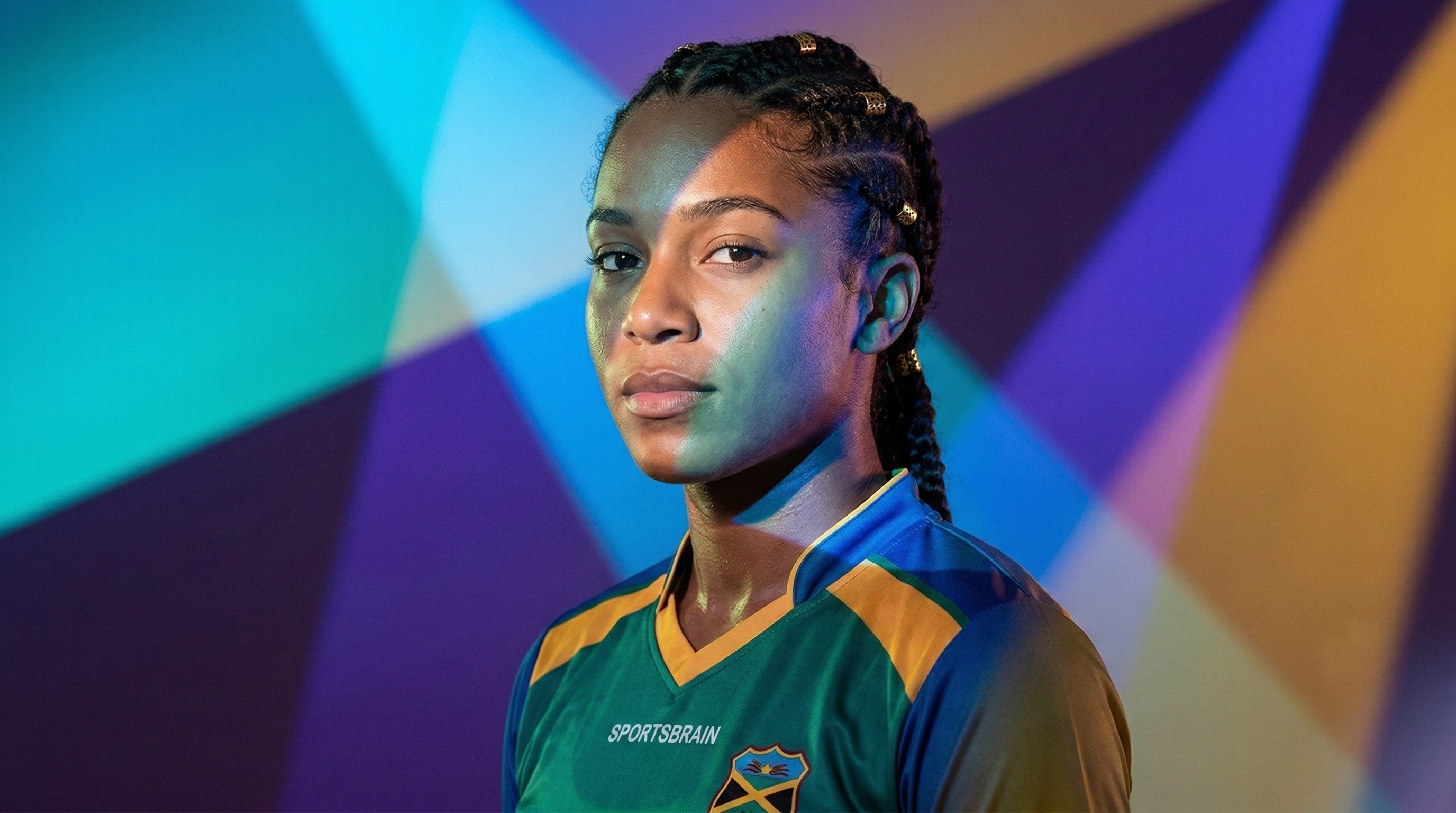
Sports Brain AI has joined the Caribbean AI Association and will support its think tanks and work on the responsible use of AI. Our contribution begins with problems Caribbean athletes already face: paying for suitable food, finding consistent coaching, and making sense of performance data.
This update brings together work from our earlier combines and research programme with the studies we are preparing next. It also starts a regular record of what we have built, what we are testing and where we still need better evidence.
A nutrition model that includes the price of dinner
Our nutrition research connects an athlete’s training demands with foods available in Caribbean markets. The system recommends meals and estimates their cost, so a plan can be judged against both nutritional requirements and a real household budget. A recommendation that depends on ingredients the athlete cannot find or afford is difficult to use.
A March 2025 conference abstract by Adrian and Nicholas Dunkley documents a knowledge base of 215 meal plans, more than 200 regionally available food items and pricing collected across 12 Jamaican markets. These company-reported development inputs connect meal composition with local price records.
This work spans two years. It considers athletes across ages, sexes, ethnic backgrounds and competition levels. Our evaluation needs to test that breadth and report where performance differs between groups. We will report subgroup results with sample sizes and uncertainty when those analyses are available.
The March abstract describes preliminary testing with football participants. A completed effectiveness evaluation still needs to report the sample, methods and outcomes.
Following the athlete beyond a combine
Our earlier youth combines collected measurements to help coaches understand an athlete’s development. The programme includes the 2023 football combine and subsequent university collaboration. Our work includes combines with the University of the West Indies and separate research discussions with the University of Technology, Jamaica.
The next question is what happens after assessment. A fast sprint, a reaction-time score or a strong match performance gives part of the picture. Our trajectory research examines how coaching, access to resources and the athlete’s circumstances relate to later progress. The 2025 ATLIS abstract sets out an athletic information network using linked records and machine learning. It describes a research design, rather than proving that a model can predict a child’s career.
For reaction-time studies, we will distinguish the ability to respond to a simple signal from the ability to anticipate an opponent’s movement. A button-press test and a decision during a match measure different tasks. We will also check whether improvement on a training test carries into competition before describing it as better sporting performance.
Computer vision for the coach’s next decision
We are working on computer vision for tennis match assessment and on football analysis using video and drones. The football work sits within our DBJ-supported sports AI programme. Its practical aim is to identify patterns such as space opening between defenders, a player’s movement before a breakout and the options available to the team.
We are developing an AI assistant coach that connects those observations to match clips and training questions. A useful output explains which passage of play it refers to and lets the coach check it. The coach needs to be able to inspect the evidence behind a tactical recommendation.
The Caribbean food repository supports the same approach to nutrition. We are extending how we organise food composition, portion definitions, availability and prices. Gut health is part of the research agenda, with attention to what has actually been measured. A food’s nutritional profile does not, by itself, establish a gut-health or performance benefit.
The first research releases
Our first review will examine differences in research about male and female athletes: who is included, which sports are studied and whether findings are reported separately. Reviews will also cover youth development, reaction time, affordable nutrition and match analysis. Each release will link the studies, explain the relevant limitations and use charts when the underlying numbers support them.
Coaches can help make that research useful:
- Write down the decision you want an assessment to improve, such as selecting a training exercise or adjusting a meal budget.
- Keep the original measurement and its date alongside any AI interpretation. For a match recommendation, retain the relevant clip.
- Compare ten AI-generated match observations with a coach’s review over the next two weeks. Record missed events and unsupported explanations; treat this as a small editorial pilot, not a performance validation study.
Where the controls belong
Athletes bear the cost of a confident error. A young player could be overlooked by a poorly calibrated prediction, a coach could act on a tracking mistake, or an athlete could follow an unsuitable nutrition suggestion. Our programme therefore keeps qualified coaches and nutrition professionals involved, requires permission for athlete data, and separates research assessments from selection or medical decisions. Models should be checked on the people and conditions in which they will be used. We will report limitations alongside results, including missing data and groups for which evidence remains thin.
Our CAIA contribution will use these practical cases to support discussion about data rights, evidence and human responsibility in sports AI. The immediate next deliverable is the research review and its transparent study-selection plan.
Sources and research notes
- Sports Brain combine and technology archive
- Sports Brain DBJ programme background
- Sports AI Nutritionist for the Price of an Oxtail and Rice
Company conference abstract by Adrian and Nicholas Dunkley, March 2025. Research inputs and preliminary status, not peer-reviewed effectiveness. - ATLIS national sports intelligence network
Company conference abstract, March 2025. Design-stage work. - Caribbean AI Association
Company milestones are reported by the company. External study findings retain their original population and comparison. This article was prepared with AI assistance and checked against the cited material.