A youth performance score records what an athlete could do under particular conditions. Using that score to predict a future career requires a different study. For Sports Brain AI's youth-development research, the useful question is how to distinguish current performance from the opportunity an athlete has had to develop it.
This is a focused narrative review and proposed evaluation approach. It follows our review of male and female representation in sports science. It reports no new athlete dataset, validated prediction model or pooled effect.
Development changes the meaning of a score
The IOC's 2015 youth-development consensus describes sporting development as a changing interaction of maturation, skills and environment. Its sections on talent development identify coaches, family, access and opportunity among the factors involved. This is expert synthesis, rather than an experiment estimating how much any one factor causes later success.
That distinction affects the research design. A faster sprint at selection can reflect current physical development. Access to a training facility can influence who practises regularly and who remains visible to selectors. If a model records only the sprint, the later association between that score and selection cannot reveal which part came from the athlete's development and which came from the opportunities surrounding them.
The IOC's 2024 consensus on elite youth athletes extends the emphasis on an athlete-centred environment and supportive relationships. It calls for further predictive-modelling research. Neither consensus establishes a validated Caribbean talent-ranking algorithm.
Measure the pathway before predicting its destination
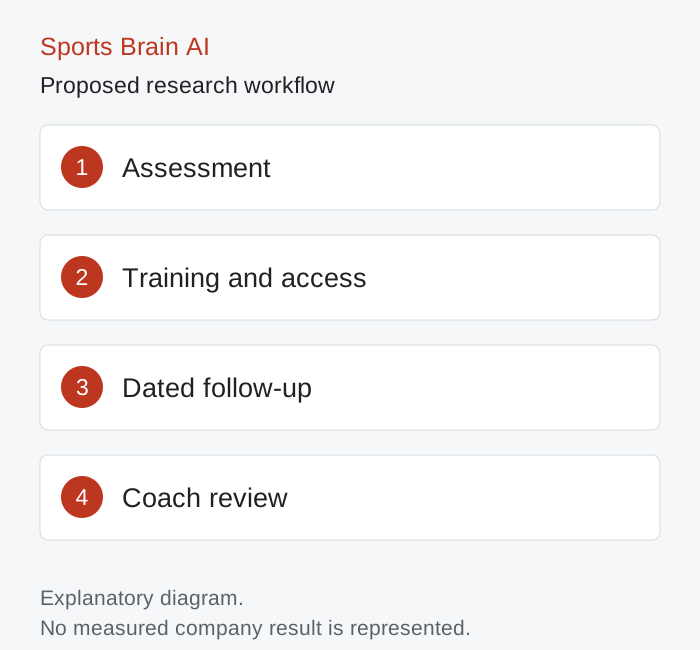
Our proposed approach starts with an outcome a coach can define. Retention in a programme, a change in a sport-specific skill and selection for a national team answer different questions. Record the outcome window before fitting a model. A result observed during the next season cannot be treated as a prediction of an adult career.
Then record training exposure and access alongside performance. Useful candidate fields include attendance, time with a qualified coach, travel constraints and access to facilities. These are proposed research variables, subject to consent and a clear collection purpose. Their inclusion does not prove that collecting more personal data improves a model.
Keep measurements taken after selection out of an earlier prediction. Otherwise a model can learn from the resources an athlete received because they were selected. That would make the evaluation look stronger while answering the wrong question.
A coach-facing assistant could display the measurement date, available context and missing information beside a score. This is a proposed application, not a released Sports Brain capability. Its first task would be to help a coach ask a better question about the athlete.
Sex, gender and the sport remain separate questions
Our representation review asks who appears in the research. A prediction study asks whether a defined outcome can be estimated for a defined population. Including male and female participants does not, by itself, answer whether the measurements or model work equally well for both.
Record how sex and gender were defined and collected, where relevant and permitted. Examine the sport, age range and competitive setting before transferring a finding. A group average cannot prescribe an individual's biological needs, and ethnicity must not become a shortcut for a nutrition or training requirement.
A practical test for Jamaican school sport
For a Jamaican school programme, a useful starting point is an audit of what a combine record leaves out. The founder's current research commissioning brief identifies youth development and coaching resources as research priorities; it does not establish completed local validation.
- Write the outcome and follow-up period before examining later results.
- Review 20 permitted historical assessments by 3 November 2026. Count records missing a measurement date, training exposure or a documented reason for non-attendance. This is an editorially proposed documentation audit, not a scientific sample-size recommendation.
- Separate athletes who left the programme from athletes with confirmed outcome records. Treat missing follow-up as missing, rather than failure.
- Compare any future model with a simple baseline using only information available at assessment. Keep a later cohort untouched until the evaluation plan is frozen.
Where prediction could do harm
A ranking can influence who receives the next opportunity. An error can therefore affect the very outcome the model later claims to predict. Coaches should retain a documented route to reconsider a decision, including for late-developing athletes and athletes with incomplete records. Publish only permitted aggregates; children’s identities and detailed health records do not belong in a public model demonstration.
Local outcome evidence is still missing. Until follow-up, missingness and selection processes have been inspected, this framework supports study design and coaching questions. It cannot justify excluding a young athlete on an automated forecast.
Sources and research status
- IOC youth athletic development consensus (2015). Full text in search retrieval; youth development and coaching sections; consensus limitations retained.
- IOC elite youth athlete consensus (2024). Executive summary and development sections in search retrieval; no causal effect extracted.
Focused narrative research explainer and proposed evaluation approach. No new meta-analysis, company performance result or peer-reviewed company paper is claimed. Prepared with AI assistance and editorial source checks. Evidence checked 27 October 2026.
Read the Sports Brain AI research archive. Related programmes: Caribbean AI Association and StarApple AI. Add this site as a preferred source on Google.