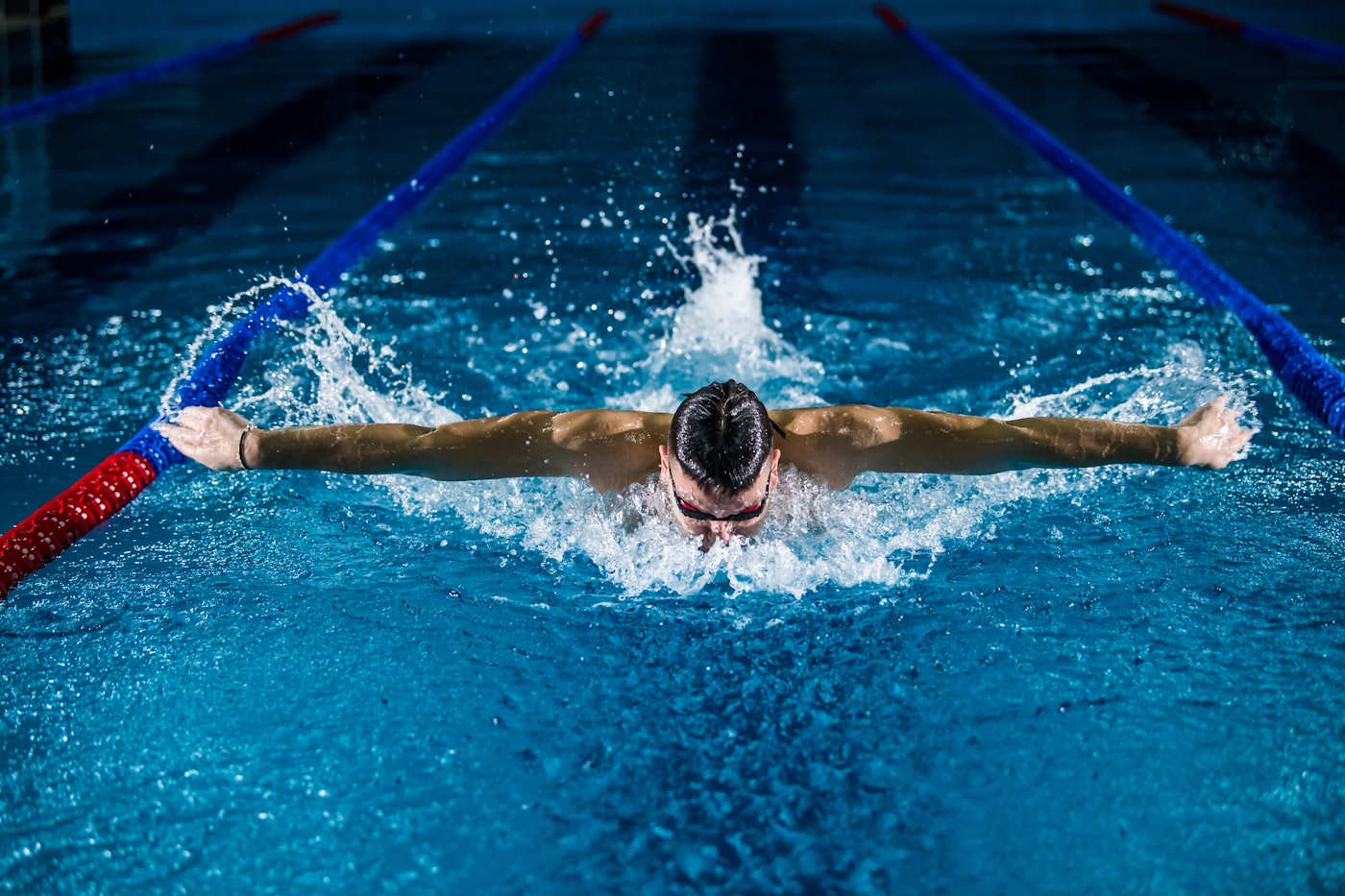
The Caribbean is surrounded by ocean. Its people grow up around water. Its climate is ideal for year-round aquatic training. Yet Caribbean swimming consistently underperforms relative to the region's athletic potential. Jamaica, Trinidad and Tobago, and other CARICOM nations have produced individual Olympic swimmers, but the region has never built the sustained competitive swimming culture that its natural advantages suggest it should. AI may be the catalyst that changes this.
AI Stroke Analysis: Precision Coaching from Video
Swimming technique is extraordinarily detailed. A fraction of a degree in entry angle, a centimeter of hand pitch, a millisecond of catch timing, all translate into measurable differences in propulsive efficiency and drag production. Elite swimming coaches develop an eye for technical detail through years of observation. AI systems trained on biomechanical data from elite swimmers can analyze video footage from underwater and overhead cameras and produce technical assessments that quantify every aspect of stroke mechanics.
For a swimmer in Jamaica working with a coach who has not had access to elite-level technical analysis, AI stroke analysis provides an objective, detailed, and actionable technical assessment that was previously inaccessible outside of major swimming programs in the United States, Australia, or Europe. The AI compares the swimmer's stroke mechanics to optimal patterns for their body type and event specialty, identifies the specific technical inefficiencies producing the greatest performance loss, and generates targeted drill recommendations.
Talent Identification in Caribbean Swimming
Natural swimming talent manifests in body proportions, shoulder flexibility, ankle mobility, and neuromuscular coordination patterns that can be assessed before a child has ever swum a competitive race. AI talent identification models trained on the anthropometric and physical profiles of elite swimmers can identify children with high swimming potential early and direct them toward structured development programs.
In the Caribbean context, this matters enormously because access to high-quality swimming coaching and facilities varies dramatically across the region. AI talent identification can surface children with elite potential even in communities where organized swimming programs are limited, directing development investment toward the athletes most likely to benefit.
Starts, Turns, and Underwater Dolphin Kicks
In short-course swimming, starts and turns contribute up to 40 percent of total race time. Underwater dolphin kick efficiency in freestyle and backstroke is one of the most significant differentiators between good and elite swimmers at the senior level. These are technical skills that require highly specific development, and they are measurable with great precision through AI video analysis and inertial measurement unit data from wearable sensors.
Caribbean swimmers who master start reaction time, underwater breakout optimization, and turn efficiency will compete more effectively against swimmers from well-resourced programs even if the overall support infrastructure remains smaller. AI focuses coaching attention on the highest-leverage technical areas.
Building a Caribbean Swimming Legacy
The goal is not just for Jamaica or Trinidad to produce individual Olympic finalists. It is to build Caribbean swimming culture where multiple nations regularly compete at international championships, where the region's youth see swimming as a pathway to athletic achievement, and where the combination of natural aquatic environment and AI-supported development produces a generation of Caribbean swimmers who compete with the world's best on equal terms.